
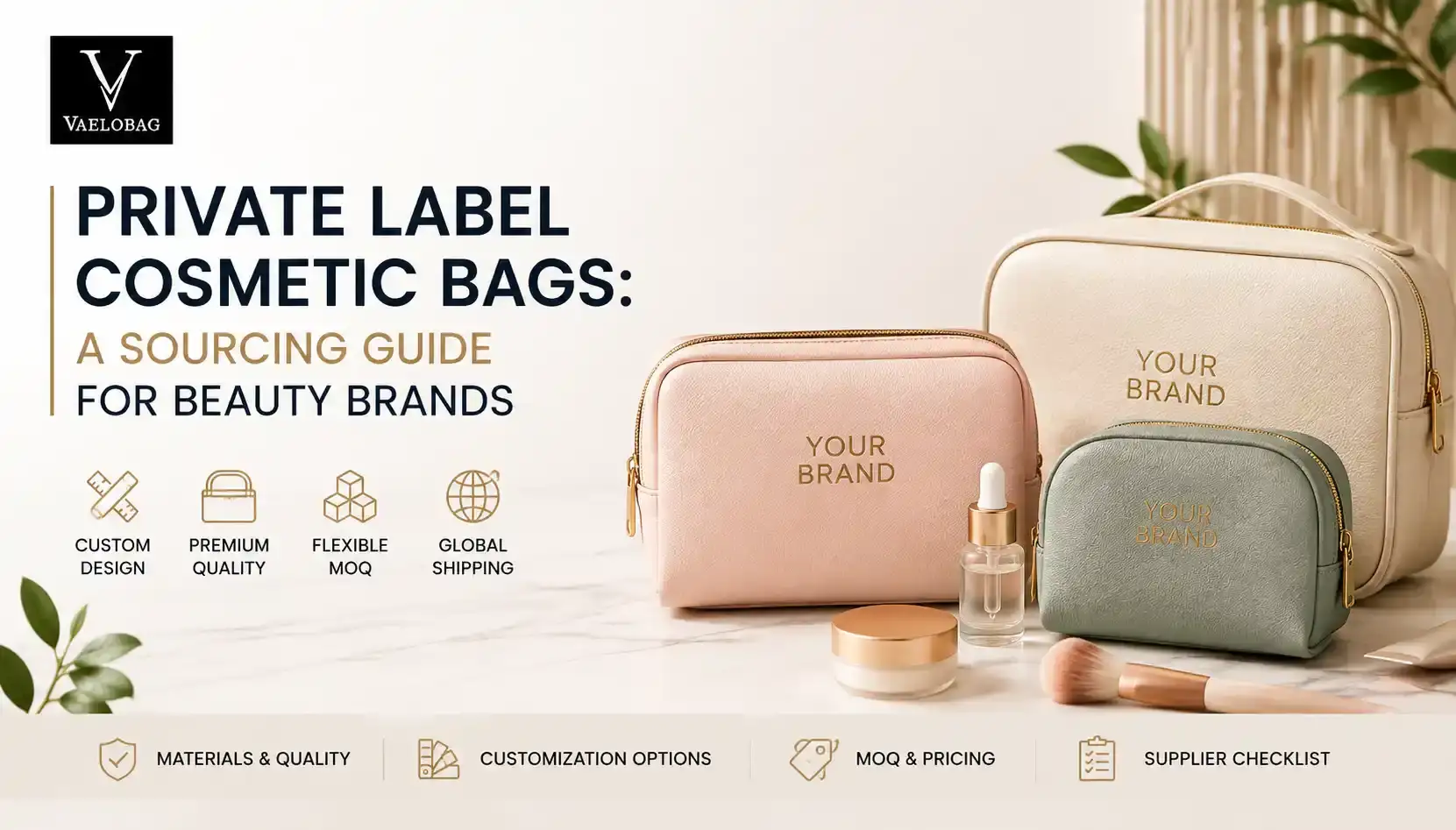
If you are adding private label cosmetic bags to your beauty product line, the biggest sourcing mistake is treating them like a standard stock purchase. You are not simply choosing a pouch and adding a logo. You are defining material, construction, branding, packaging, MOQ, sampling, and production requirements that will directly impact your margins and customer experience.
For beauty brands, DTC founders, and retail buyers, the goal is clear: develop a product that aligns with your brand identity, meets strict quality standards, and allows for seamless repeat orders. The right sourcing workflow begins long before reaching out to a factory.
Adding custom cosmetic bags expands your product line while driving high-margin revenue. For subscription box operators, a custom bag elevates perceived value and improves unboxing experiences. For retail beauty brands, cosmetic bags serve as lucrative checkout add-ons or bundled promotional gifts. Tailored accessories create visual consistency across your catalog, reinforcing brand recognition. Balancing visual differentiation with manageable sampling costs, realistic MOQs, and reliable lead times is essential for long-term profitability.
Selecting between OEM and ODM determines your production timeline, sampling budget, and ultimate degree of product differentiation.
With OEM production, you provide the technical design specifications and the factory builds the bag from scratch. This includes exact dimensions, material weight, fabric colors, compartment layouts, hardware finishes, lining choices, and custom artwork treatments.
OEM is best suited for brands that require a fully proprietary shape or unique functional layout unavailable in off-the-shelf options. However, OEM manufacturing demands longer development cycles, multiple sampling iterations, and higher initial sampling fees before entering bulk production.
With ODM, the factory uses an established bag structure that you customize with your choice of materials, colors, hardware, and custom branding.
ODM provides a faster, cost-effective route for first-time orders. You leverage proven pattern designs while modifying visual elements like fabric texture, zipper finishes, logo placement, and interior pockets. For emerging beauty brands testing new product lines, ODM minimizes development risk while delivering a fully branded product. Vaelobag Global supports both OEM and ODM manufacturing paths for beauty accessory projects.
Material selection impacts product durability, unit cost, and brand positioning. Always request physical fabric swatches rather than relying on standard factory material descriptions.
PU offers a smooth, leather-like finish with extensive color customization options. Premium cosmetic brands often use it for a polished look without the high cost of genuine leather.
PVC provides clear or translucent structural options, ideal for see-through travel pouches and TSA-compliant cosmetic bags. It offers low production costs and quick-wipe cleaning capability.
Oxford fabric (such as 300D, 600D, or 1680D polyester/nylon) delivers high abrasion resistance and a durable structure. It resists tearing and tolerates heavy daily usage.
Canvas provides a tactile, natural aesthetic ideal for clean skincare, organic cosmetic lines, and eco-focused brands. Heavyweight cotton canvas (ranging from 10oz to 16oz) provides strong structural body.
Preparing a complete tech pack reduces lead times and prevents costly quoting errors. Define the following parameters before requesting factory quotes.
Specify exact external dimensions (Length x Width x Height in millimeters or inches) instead of using vague descriptors. Detail the interior compartment specs, including wall dividers, elastic brush loops, zipper mesh pockets, and removable pouch inserts.
Select zipper sizing appropriate for the bag scale, such as #3 nylon coil for internal pockets and #5 metal or molded plastic zippers for main closures. Specify metal hardware finishes (gold, rose gold, brushed nickel, or gunmetal) and confirm anti-rust coating standards.
Choose interior fabrics based on functional needs, such as 210D polyester, wipeable TPU, or soft velvet lining. Ensure the lining material prevents leaks from seeping into outer shell layers.
Select branding treatments compatible with your chosen outer material:
Minimum order quantities (MOQ) depend on raw material availability and custom dye requirements. While standard factory MOQs typically start at 500 to 1,000 units per style, low-MOQ options are accessible when using stock fabric colors. MOQ can vary by brand, so it’s best to contact the supplier to request a sample and MOQ details.
The standard sampling and bulk production process follows seven distinct stages:
While cosmetic bags carry fewer chemical regulations than skin-applied cosmetics, international trade standards still apply. Ensure materials meet REACH regulations (Europe) or Prop 65 standards (California) regarding heavy metals, lead, and phthalate content in PU and PVC fabrics.
If marketing bags as eco-friendly or recycled, request supporting material transaction certificates (such as GRS - Global Recycled Standard) from your supplier. Review comprehensive sourcing guidelines via our compliance documentation guide.
Use this pre-production checklist before signing purchase orders or transferring deposits:
| No. | Checkpoint | Requirement Details |
|---|---|---|
| 1 | Material Confirmed | Specific fabric type, grade, backing thickness, and Pantone color match |
| 2 | Spec Sheet Ready | Clear external/internal dimensions, pocket counts, and zipper gauges |
| 3 | Branding Method Chosen | Artwork file approved for print, embroidery, emboss, or hot stamp |
| 4 | Sample Ordered | Physical pre-production sample inspected and approved |
| 5 | MOQ Confirmed | Agreed minimum order volume per SKU, fabric color, and design |
| 6 | Compliance Docs Requested | REACH, Prop 65, or GRS material test reports collected |
| 7 | Timeline Agreed | Delivery milestones set for sampling, bulk production, and freight |
Vaelobag Global specializes in low-MOQ production and boutique-quality manufacturing for emerging beauty brands, subscription services, and retail chains. By supporting both flexible OEM and ODM workflows, brands can launch custom lines quickly without committing to unmanageable inventory volumes.
The factory processes a wide range of materials including premium PU, durable PVC, Oxford fabric, and natural canvas. Customization options include silk screen printing, precision embroidery, hot foil stamping, and deep embossing. Explore the full range of custom options by visiting our dedicated cosmetic bags catalog or browsing specialized makeup bags.
To evaluate a potential wholesale cosmetic bag supplier, assess factory responsiveness, sample quality consistency, and export experience alongside unit pricing. Learn more about our manufacturing standards on our About Us page.
Successful private label sourcing depends on defining technical specifications before starting production. Lock down materials, compartment dimensions, branding methods, and compliance needs during initial planning. When you are ready to initiate your next project, request a quote to review custom production options with our engineering team.
Material is the first decision in a cosmetic bag order, and it affects almost everything after it: how the bag looks on a shelf, how it handles spills, how it ages in a humid bathroom, and what pap...
READ FULLIf you are adding private label cosmetic bags to your beauty product line, the biggest sourcing mistake is treating them like a standard stock purchase....
READ FULLNothing makes a retail season fail faster than a shipment of subpar tote bags. You've been there, or at least you've heard the horror stories from fellow distributors: ...
READ FULL