
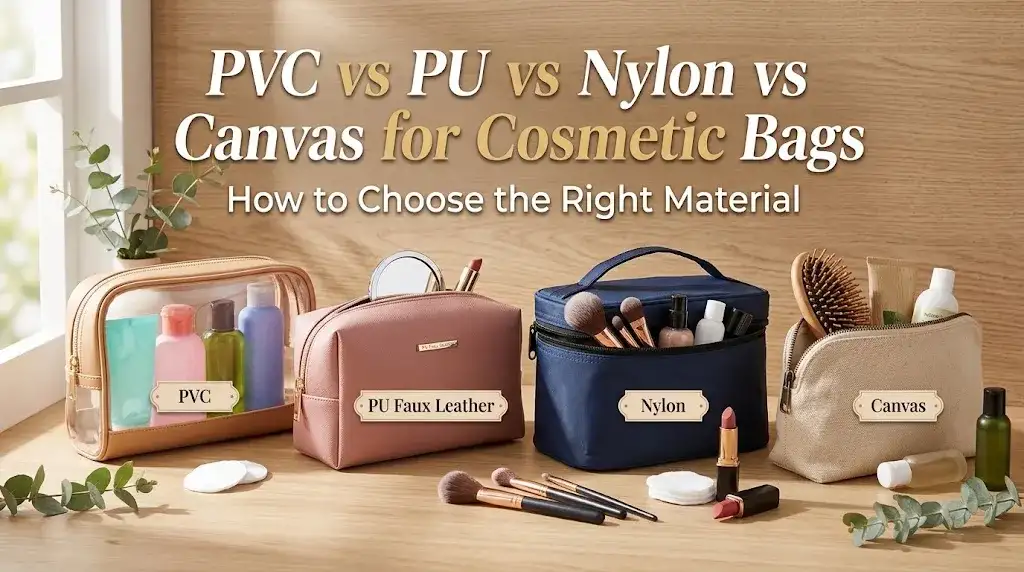
Material is the first decision in a cosmetic bag order, and it affects almost everything after it: how the bag looks on a shelf, how it handles spills, how it ages in a humid bathroom, and what paperwork your market expects. Most orders come down to four options: PVC, PU, nylon, and cotton canvas. This guide compares them on the points that matter to a buyer, so you can brief a factory with specifics instead of adjectives.
| Material | Typical Use | Main Strength | Main Risk |
|---|---|---|---|
| PVC | Clear and wipe-clean pouches | Stain resistance, easy cleaning | Stiffer feel, cracking in high-stress areas, phthalate rules |
| PU | Soft, leather-look makeup bags | Softer hand, closer to real leather | Hydrolysis, weaker against solvents and alcohol |
| Nylon | Light travel and gym pouches | Strength, abrasion resistance | Water resistance depends on the coating |
| Canvas | Casual, natural-look bags | Dense cotton weave | Low water resistance unless waxed |
PVC leather is a plastic coating on a fabric base. That coating is what gives it stain resistance and makes it easy to wipe clean, which suits a bag that will meet foundation, lotion, and the occasional leaking bottle. It also holds up well against weather and moisture, and it usually costs less than comparable PU.
The trade-offs are feel and aging. PVC is stiffer than PU, and over time it can turn brittle and crack in high-stress areas. When you check samples, look at folds and zipper ends first.
PVC also carries the compliance question. It is normally softened with plasticizers, and these are often phthalates, at around 20 to 40% of the material and sometimes more than half. In the EU, REACH Annex XVII entry 51 caps the combined DEHP, DBP, BBP and DIBP content at 0.1% by weight of the plasticized material. That limit started in toys and childcare articles and has been extended to plasticized material in articles generally. If you sell into the EU or similar markets, ask the supplier for a phthalate test report on the exact material, and check the current regulation text for your destination.
PU leather is a polyurethane coating on a base such as polyester or microfibre. It feels softer than PVC, looks closer to real leather, and breathes better. Abrasion resistance is lower than PVC, and it is less resistant to solvents and alcohol, so it is worth testing if the bag will carry products with those ingredients.
The main issue is hydrolysis. Moisture slowly breaks down the polyurethane, and heat and humidity speed it up. The result is cracking, peeling, or a sticky surface. Resin quality makes a large difference: cheaper resin systems break down sooner, and polycarbonate-based resins are the durable option. Industry tests such as ISO 1419 and ASTM D3690 age the material at 158°F (70°C) and 95% relative humidity before checking it, so you can ask for a hydrolysis result instead of guessing.
One labeling trap: a product sold as “PU leather” can include bicast or bonded leather, which contains animal hide. If you need a fully synthetic material, say so in the order.
Nylon is known for tensile strength and abrasion resistance, which is why it appears in luggage, backpacks, and handbags. Fabric weight is described in denier, which is the weight in grams of 9,000 meters of fiber. A higher number generally means a thicker, heavier yarn.
For cosmetic bags, the coating matters more than the nylon itself. PU-coated nylon repels water, PVC-coated nylon adds stiffness and strength, and silicone-coated nylon repels water better still. Even so, a 420D PU-coated nylon is water repellent, not waterproof. Water that hits with enough force can get through. If a supplier calls a nylon pouch waterproof, ask what that claim is based on. Compared with polyester, nylon also absorbs more water.
Cotton duck is a tightly woven, heavy plain-weave cotton. Its weight is usually stated in ounces per square yard or through the numbered duck system, where the number equals 19 minus the weight in ounces of a 22-inch-wide linear yard. A smaller number means heavier fabric.
Some reference points:
Plain canvas absorbs liquid, and #12 has the least water resistance of the numbered grades. Waxing makes duck water resistant. When you order canvas, specify the weight in oz per square yard or gsm, not “thick canvas,” since the words mean different things from one factory to the next.
Vaelobag’s range, for example, includes both PU and PVC cosmetic bags, such as a PU waterproof makeup bag and a large-capacity transparent PVC cosmetic bag. Price depends on fabric grade and coating, so compare quotes only when the specs match.
A clear brief saves one or two rounds of sampling, and it gives you something to measure the delivery against. If you are comparing materials for a private label line, send us the target market and use case, and we will tell you which of these options we can quote.
Material is the first decision in a cosmetic bag order, and it affects almost everything after it: how the bag looks on a shelf, how it handles spills, how it ages in a humid bathroom, and what pap...
READ FULLIf you are adding private label cosmetic bags to your beauty product line, the biggest sourcing mistake is treating them like a standard stock purchase....
READ FULLNothing makes a retail season fail faster than a shipment of subpar tote bags. You've been there, or at least you've heard the horror stories from fellow distributors: ...
READ FULL