How to Start a Bag Business: Step-by-Step Guide
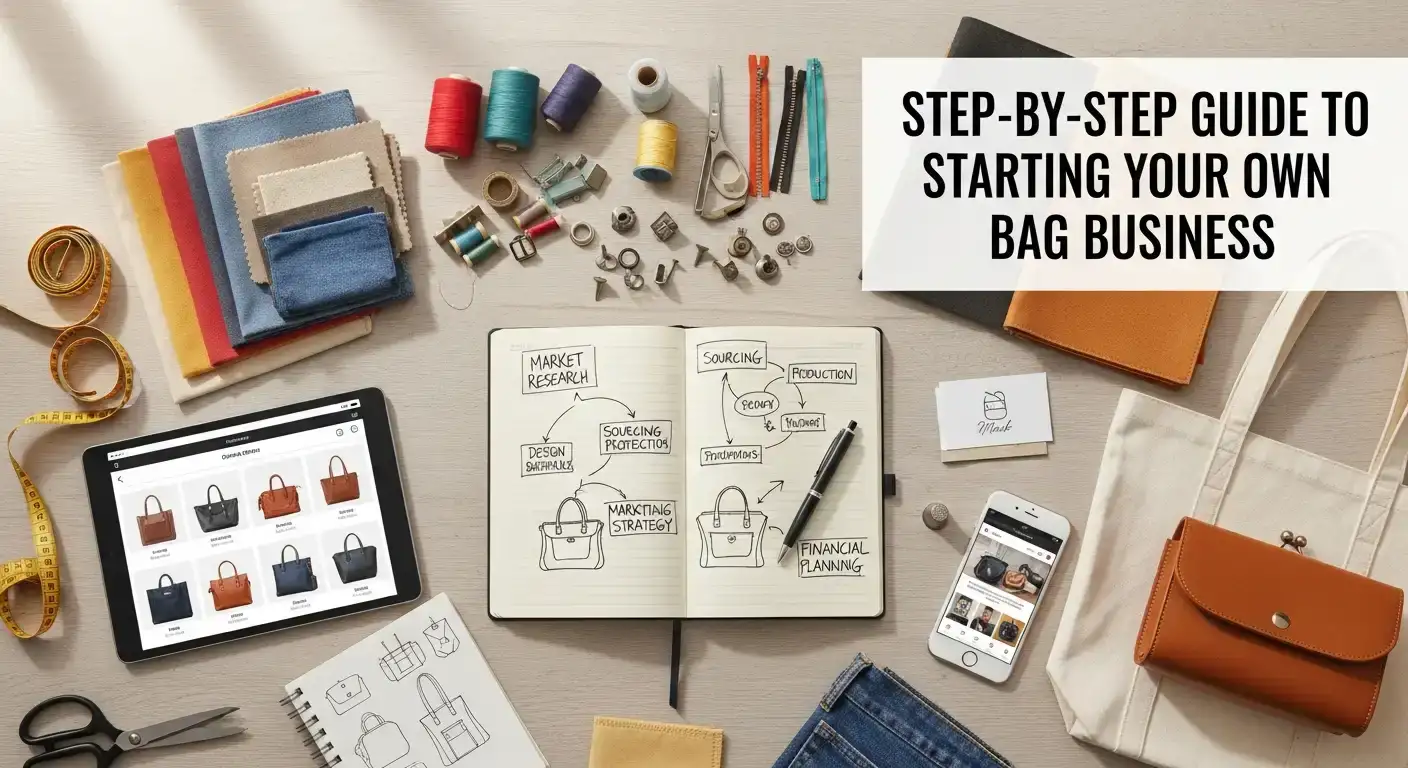
To start a bag business, choose a profitable bag niche, define your target customer, select a business model such as wholesale, private label, OEM or ODM, find a suitable bag manufacturer, develop and approve product samples, calculate MOQ and landed costs, establish quality requirements, and launch through your chosen sales channels.
This guide explains how to start a bag business from the ground up, including choosing a profitable niche, selecting the right business model, finding a manufacturer or supplier, developing products, managing minimum order quantities and costs, and preparing for production and sales.
1. Choose What Type of Bag Business You Want to Start
The first decision is not simply whether you want to sell bags. You need to decide which type of bags you want to sell and who will buy them.
Common opportunities include:
Each category has different customers, pricing expectations, materials, product features, and production requirements.
For example, a handbag brand may focus heavily on fashion, materials, hardware, and branding, while a tote bag business may compete more on practicality, customization, quantity, and price. A luggage brand may require stronger construction, specialized hardware, wheels, handles, and more demanding quality checks.
Choosing a specific category early makes it easier to define your product range and identify the right manufacturing partner.
2. Define Your Target Customer and Market
Once you choose a product category, identify the customer you want to serve.
Your target customer could be:
- Fashion-conscious consumers
- Travelers
- Students
- Retailers
- Corporate buyers
- Promotional product distributors
- Hotels and resorts
- Ecommerce businesses
- Established fashion or lifestyle brands
Think about what this customer values most. It could be price, durability, design, sustainability, functionality, customization, or branding.
You should also decide whether you want to sell directly to consumers or supply other businesses.
A B2C bag brand may need a stronger focus on branding, ecommerce, product photography, and customer acquisition. A B2B supplier or private label business may place greater emphasis on MOQ, sampling, customization, production capacity, quality control, and delivery.
3. Choose Your Bag Business Model
There are several ways to enter the bag industry.
Wholesale
You purchase finished bags in bulk and resell them. This can be a practical option for businesses that want to enter the market without developing products from scratch.
Private Label
You use an existing product or product concept and customize it with your own branding, labels, colors, packaging, or other agreed specifications.
OEM
You provide your own product requirements or design and have a manufacturer produce the bags according to those specifications.
ODM
You work with a manufacturer that already has product development capabilities or existing designs, then customize suitable products for your brand.
The best model depends on how much control you need over product design, branding, investment, and production.
4. Research the Market Before Developing Products
Market research should help you answer practical questions, not just confirm that people buy bags.
Research:
- Which bag categories are selling in your target market?
- Who are the main competitors?
- What price ranges are common?
- What materials are being used?
- Which product features are important to buyers?
- Are there underserved customer groups?
- What problems do existing bags fail to solve?
Study competing products carefully. Look at their dimensions, materials, colors, features, packaging, positioning, and customer feedback.
Customer reviews can also reveal opportunities. Repeated complaints about weak handles, poor zippers, insufficient pockets, uncomfortable straps, or poor organization can help you identify improvements for your own product.
5. Develop Your Bag Product Specifications
Before contacting manufacturers, prepare as much product information as possible.
Depending on the bag type, your specifications may include:
- Product type
- Length, width, and height
- Material
- Lining
- Color
- Handle or strap design.
- Pockets and compartments
- Zippers and closures
- Hardware
- Logo placement
- Printing or embroidery
- Labels and tags
- Packaging requirements
You do not need a perfect technical drawing before contacting a manufacturer. A reference image, sketch, sample product, or detailed description can often provide a useful starting point.
The more clearly you define your requirements, however, the easier it becomes for suppliers to quote accurately and develop samples.
6. Find the Right Bag Manufacturer or Supplier
Finding a supplier is one of the most important steps when starting a bag business.
Do not choose a manufacturer based only on the lowest quoted price. Compare suppliers based on their ability to meet your actual requirements.
Ask potential manufacturers about:
- Product specialization
- MOQ
- Sample development
- Customization options
- Materials
- Production capacity
- Quality control procedures
- Lead times
- Packaging
- Export experience
- Communication and response time
A manufacturer that specializes in the type of bag you want to sell may be a better fit than a supplier that produces a very broad range of unrelated products.
Request product information and examples of previous work before making a major production commitment.
7. Order Samples Before Placing a Bulk Order
Never treat the manufacturer's product description as a substitute for a physical sample.
A sample allows you to evaluate the actual product before committing to larger quantities.
Check:
Construction
Look at stitching, seams, reinforcement, and overall artistry.
Materials
Confirm that the material matches your requirements for appearance, thickness, feel, and durability.
Hardware
Test zippers, clasps, buckles, handles, and other components.
Dimensions
Measure the finished product against your specifications.
Branding
Check logo placement, printing, embroidery, labels, and other branding elements.
Functionality
Use the bag as an actual customer would. Check whether compartments, handles, straps, and closures work as intended.
If the sample needs changes, resolve those issues before bulk production.
8. Understand MOQ, Pricing, and Total Costs
The quoted unit price is only one part of the cost of starting a bag business.
Depending on your business model, costs can include:
- Product development
- Samples
- Manufacturing
- Customization
- Labels
- Packaging
- Inspection
- Freight
- Customs and import charges
- Warehousing
- Marketing
Ask manufacturers for clear quotation details and confirm what is included.
Also check the minimum order quantity (MOQ). A low unit price may not be attractive if the required order quantity is too high for your business.
For a new brand, it may be more practical to start with a manageable number of designs and quantities, test demand, and then increase production as sales become more predictable.
9. Build Your Brand and Packaging
A bag is not only a physical product. Your branding can influence how customers perceive its value.
Develop a consistent approach to:
- Logo
- Brand colors
- Labels
- Hangtags
- Packaging
- Product photography
- Product descriptions
Your branding should match your target market.
A premium handbag line may require a very different presentation from a promotional tote bag supplier or a travel bag business.
If you are working with a private label or OEM manufacturer, discuss branding requirements early so they can be incorporated into sampling and production.
10. Establish Quality Control Standards
Define quality before production begins, rather than evaluating it only after the shipment arrives.
Create clear expectations for:
- Dimensions
- Material
- Color
- Stitching
- Hardware
- Logo placement
- Zipper performance
- Packaging
- Quantity
- Acceptable defects
Approve the final sample before mass production and make sure the production team has the correct specifications.
For larger orders, consider an inspection process before shipment so you can identify quality problems before the goods reach your warehouse or customers.
11. Plan Manufacturing and Shipping
Once your sample has been approved, confirm the production schedule.
Ask the manufacturer to clarify:
- Production lead time
- Packaging completion
- Shipment readiness
- Shipping method
- Required documentation
- Delivery terms
For international orders, understand the difference between product cost and landed cost. Freight, duties, taxes, and other import-related expenses can significantly affect your actual cost.
Build enough time into your planning for sampling, production, inspection, transportation, and unexpected delays.
12. Decide How You Will Sell Your Bags
Your sales model should match your target market.
Possible channels include:
Ecommerce
Sell directly through your own website or an ecommerce marketplace.
Retail
Supply boutiques, department stores, specialty retailers, and other physical stores.
Wholesale
Sell larger quantities to distributors and business buyers.
Corporate and Promotional Sales
Offer customized bags for events, companies, hotels, resorts, schools, or organizations.
B2B Brand Supply
Produce bags for brands that want private label, OEM, or ODM manufacturing without operating their own factory.
Before production, determine which channel you will use so that your product specifications, packaging, pricing, and quantities match the sales model.
13. Start Small, Test Demand, Then Scale
One of the biggest mistakes new bag businesses make is launching too many products at once.
Instead, consider starting with a focused collection.
For example, a new handbag brand could begin with a small number of core styles rather than dozens of unrelated designs. A tote bag business may test several materials, sizes, or printing options before expanding the range.
Use early sales data to determine:
- Which products sell best
- Which price points work
- Which colors are most popular
- Which features customers value
- Which products deserve reordering
Then use that information to guide future production.
14. Common Mistakes When Starting a Bag Business
Choosing a manufacturer based only on price
The cheapest quote may not deliver the best quality, consistency, or communication.
Skipping the sample stage
Bulk production should not be your first opportunity to inspect the product.
Ordering too many designs
Too many SKUs can tie up capital in slow-moving inventory.
Ignoring MOQ
Always understand the required quantity before developing a product around a supplier's offer.
Failing to calculate landed cost.
The factory price is not necessarily your final cost.
Using vague product specifications
Ambiguous requirements can lead to differences between what you expected and what the manufacturer produces.
Ignoring quality control
Quality problems can become much more expensive after the products have already been shipped.
Focusing only on the product
A strong product still needs clear positioning, branding, distribution, and a realistic sales strategy.
How to Start a Handbag Business
Starting a handbag business requires special attention to design, materials, hardware, branding, and customer positioning.
First, choose the type of handbag and target customer you want to serve. Then define the materials, dimensions, hardware, colors, compartments, and branding requirements. Work with a manufacturer that can produce the desired construction and finish, and always approve a sample before placing a bulk order.
If you are building a fashion-focused handbag brand, product design and brand presentation may be particularly important. If you are supplying retailers or distributors, pricing, MOQ, consistency, and delivery may carry more weight.
How to Start a Tote Bag Business
Tote bags can be developed for fashion, retail, promotional, hospitality, corporate, and everyday-use markets.
When developing tote bags, consider:
- Fabric or material
- Bag dimensions
- Handle length
- Handle construction
- Weight capacity
- Printing or logo method
- Interior pockets
- Closures
- Packaging
For B2B buyers, customization, MOQ, production consistency, and pricing are often key considerations.
How to Start a Luggage Brand
A luggage business generally requires more attention to construction and functional components than a basic tote or shopping bag.
Depending on the product, you may need to evaluate:
- Handles
- Wheels
- Zippers
- Frames
- Compartments
- Reinforcement
- Materials
- Weight
- Durability
Work with a manufacturer with the relevant production capabilities, rather than assuming every general bag supplier can manufacture luggage to the required standard.
Frequently Asked Questions
How much does it cost to start a bag business?
The cost varies considerably depending on the bag category, business model, product quantity, customization, packaging, marketing, and shipping. Starting with a focused product range can help control initial inventory investment.
How do I find a bag manufacturer?
Look for manufacturers with experience in your specific bag category. Compare MOQ, customization, samples, production capabilities, quality control, lead times, and communication before selecting a supplier.
Can I start a bag business from home?
Yes. You can manage activities such as branding, ecommerce, marketing, customer service, and supplier coordination without operating your own factory. You can outsource manufacturing to an appropriate supplier.
What is the difference between private label, OEM, and ODM bags?
Private label generally involves branding an existing or adaptable product. OEM focuses on producing to your specifications, while ODM uses a manufacturer's product development capabilities and customizes a suitable design.
What should I ask a bag manufacturer before placing an order?
Ask about MOQ, samples, materials, customization, production lead time, quality control, packaging, shipping terms, and the manufacturer's experience with similar products.
Should I order samples before buying bags in bulk?
Yes. A sample lets you check materials, construction, dimensions, functionality, hardware, and branding before committing to mass production.
Final Takeaway
Starting a bag business is not simply about finding a product and putting it up for sale. Your decisions about the niche, business model, manufacturer, product specifications, MOQ, quality, pricing, branding, and sales channel affect the business's potential.
For new entrepreneurs and established brands, working with the right bag manufacturer can make product development and bulk production more manageable. Start with a clear product concept, validate the market, order samples, calculate total costs, and scale your product range based on actual demand.